Be yourself; Everyone else is already taken.
— Oscar Wilde.
This is the first post on my new blog. I’m just getting this new blog going, so stay tuned for more. Subscribe below to get notified when I post new updates.
Be yourself; Everyone else is already taken.
— Oscar Wilde.
This is the first post on my new blog. I’m just getting this new blog going, so stay tuned for more. Subscribe below to get notified when I post new updates.
Many students begin to learn history through stories of the political past: presidents and kings, Congress and parliament, revolutions and wars. History courses at Yale cover all of these subjects in depth, from the imperial rule of Alexander the Great through the presidency of Barack Obama. But they also take a more expansive view of “politics and law,” exploring how a wide range of ideologies, institutional structures, social movements, and political cultures have shaped the global political past. How have different societies, in different moments, conceived of what it means to be a “citizen”? How have different political ideologies—communism, fascism, liberalism, conservatism—both emerged from and produced different political cultures in different regions of the world? How have ordinary people sought to challenge and influence the governing structures of their own societies, and how have governments in turn responded? How does the ground-level process of politics work? What ideals, rhetoric, and rituals do people value? How do courts, government agencies, and political parties operate as social institutions? We cannot understand today’s headlines—from the revolutions and crackdowns in the Middle East, to the rise of China as a global power, to political gridlock in Washington—without knowing how they emerged out of political and legal conflicts in the past.
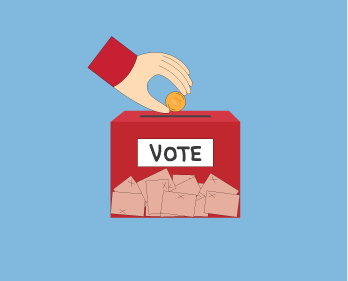
Vote-buying and vote-selling obstruct the democratic process, yet they remain pervasive in many developing democracies. Researchers asked voters in the Philippines to make a simple, unenforceable promise not to accept money from politicians or to promise to vote according to their conscience, even if they do accept money, to test the impact of promises on voters’ behavior. A majority of respondents made promises not to sell their votes. Researchers found that the promise significantly reduced vote-selling, cutting the number of people who sold their votes by 11 percentage points in the smallest-stakes election, but was not effective in the mayoral election with higher pay-outs. These results suggest that simply asking voters to promise not to sell votes can help reduce vote-selling.

ANTI BIAS
The heart of anti-bias work is a vision of a world in which all children are able to blossom, and each child’s particular abilities and gifts are able to flourish. In this world:
This is an example post, originally published as part of Blogging University. Enroll in one of our ten programs, and start your blog right.
You’re going to publish a post today. Don’t worry about how your blog looks. Don’t worry if you haven’t given it a name yet, or you’re feeling overwhelmed. Just click the “New Post” button, and tell us why you’re here.
Why do this?
The post can be short or long, a personal intro to your life or a bloggy mission statement, a manifesto for the future or a simple outline of your the types of things you hope to publish.
To help you get started, here are a few questions:
You’re not locked into any of this; one of the wonderful things about blogs is how they constantly evolve as we learn, grow, and interact with one another — but it’s good to know where and why you started, and articulating your goals may just give you a few other post ideas.
Can’t think how to get started? Just write the first thing that pops into your head. Anne Lamott, author of a book on writing we love, says that you need to give yourself permission to write a “crappy first draft”. Anne makes a great point — just start writing, and worry about editing it later.
When you’re ready to publish, give your post three to five tags that describe your blog’s focus — writing, photography, fiction, parenting, food, cars, movies, sports, whatever. These tags will help others who care about your topics find you in the Reader. Make sure one of the tags is “zerotohero,” so other new bloggers can find you, too.

 politics